UK Study Opportunities for International Students Beyond the Classroom
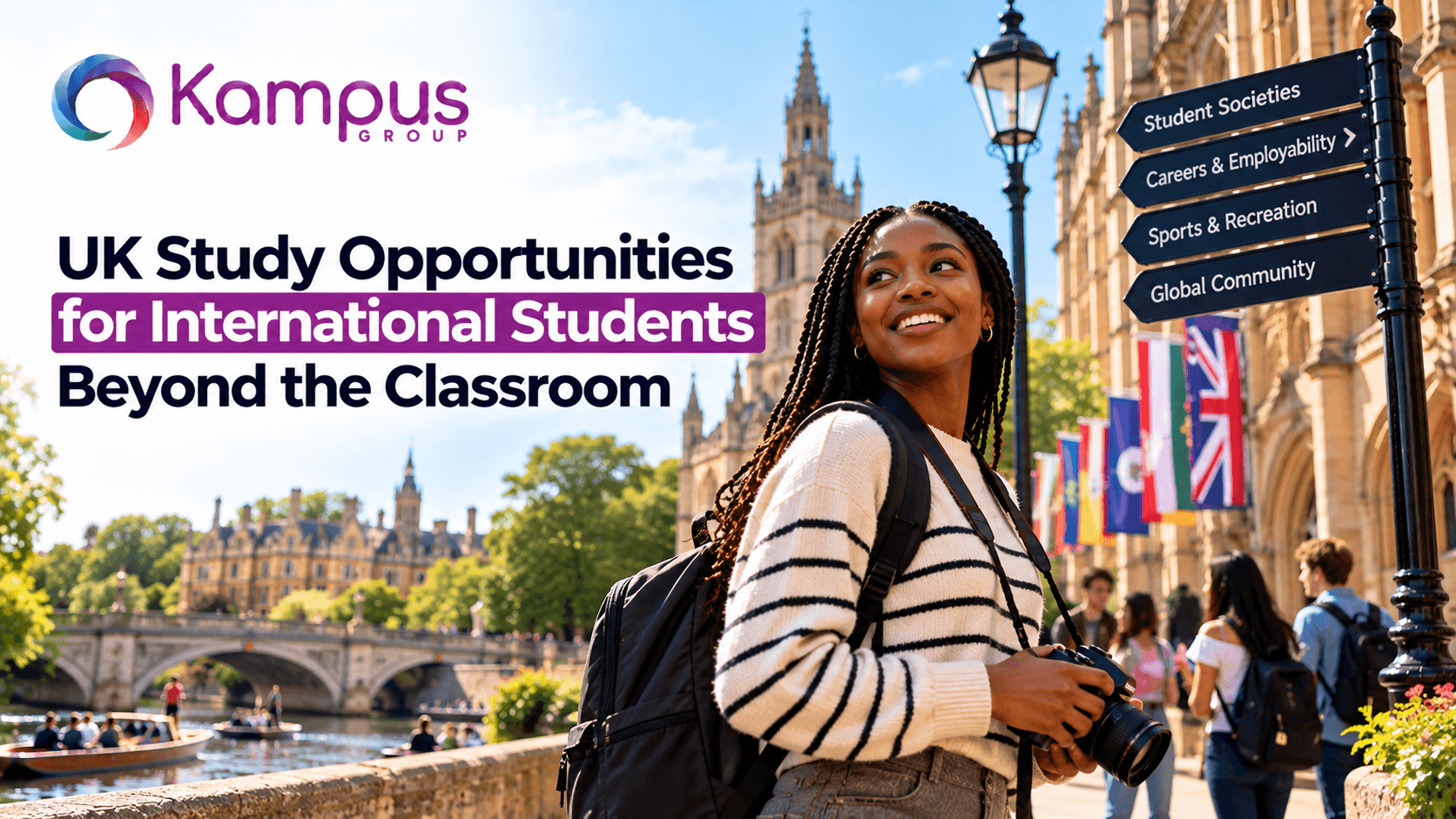
Studying in the United Kingdom offers international students more than lectures, assignments, examinations, and academic qualifications. Universities provide opportunities to develop professional skills, build networks, gain practical experience, participate in research, and explore interests outside their chosen courses.
For students planning to study in the UK in 2027, these experiences can make a significant difference to their university journey. Taking part in activities beyond the classroom can help students become more confident, understand British workplace culture, develop transferable skills, and prepare for life after graduation.
However, making the most of these opportunities requires planning. International students need to understand which activities are available, how to access them, and what restrictions may apply to paid work, volunteering, placements, and immigration conditions.
This guide explores the most valuable opportunities available to international students beyond the classroom and explains how to use them to support academic, personal, and professional development.
1. Internships and Work Experience Opportunities
Internships allow students to apply academic knowledge in professional settings. Depending on the course and employer, students may gain experience in areas such as business, finance, engineering, marketing, information technology, healthcare, and research.
Some internships take place during university holidays, while others are integrated into degree programmes. Certain courses include a placement year or an assessed work-based learning component.
For international students, relevant work experience can help bridge the gap between academic learning and employer expectations.
How to Find Internship Opportunities
Students can explore internship opportunities through:
- University careers services and employability teams.
- Employer presentations and campus recruitment events.
- University job portals and vacancy boards.
- Professional networking platforms such as LinkedIn.
- Company websites and graduate recruitment programmes.
- Academic departments that maintain industry partnerships.
When applying, tailor your CV to the role, highlight relevant skills, and explain how your academic background relates to the employer’s needs.
Important: International students must check their visa conditions before undertaking employment. Student visa holders may have restrictions on working hours and certain types of work. Some internships or placements may be permitted under specific conditions, but permission should never be assumed.
2. University Societies and Student Clubs
University societies provide opportunities to meet people, explore interests, develop leadership skills, and participate in activities outside academic study.
Most universities have societies covering a wide range of interests, including entrepreneurship, technology, finance, public speaking, volunteering, sports, photography, culture, and professional development.
Joining a society can be particularly helpful for international students who are adjusting to a new country and want to build friendships beyond their course.
Benefits of Joining Student Societies
Participating in student clubs can help you:
- Improve communication and teamwork.
- Develop leadership and event-management skills.
- Meet students from different countries and academic backgrounds.
- Discover professional interests and potential career paths.
- Build confidence in unfamiliar social environments.
Students can also take on committee roles, organise events, manage budgets, or coordinate projects. These responsibilities can provide useful examples to discuss during future job interviews.
Choose societies that genuinely interest you or support your career goals. Participating consistently in one or two activities can be more valuable than joining many clubs without meaningful involvement.
3. Networking With Employers and Industry Professionals
Building professional relationships is an important part of preparing for employment. UK universities often organise networking events, employer presentations, careers fairs, alumni panels, and industry-specific workshops.
These events give students opportunities to learn about different career paths, understand employer expectations, and discover potential internship or graduate recruitment opportunities.
How to Make Networking More Effective
Before attending an event, research the organisations and speakers who will be present. Prepare a brief introduction explaining your course, interests, and the type of work you hope to pursue.
During conversations, ask thoughtful questions about the industry, required skills, career progression, and opportunities for gaining relevant experience.
After the event, connect with relevant professionals on LinkedIn where appropriate and send a short, personalised follow-up message.
Networking is not simply about collecting contacts. The aim is to build genuine professional relationships, learn from experienced people, and identify opportunities that match your interests.
4. Research Projects and Academic Opportunities
International students can sometimes participate in research projects outside their regular classroom activities. These opportunities may be available through academic departments, research centres, laboratories, faculty-led projects, or university research programmes.
Research experience can be particularly valuable for students considering doctoral study, research careers, technical roles, or professions that require analytical skills.
Depending on the discipline, students may help with literature reviews, data collection, laboratory work, surveys, data analysis, or research presentations.
How to Access Research Opportunities
Start by reviewing your department’s website and asking lecturers or academic advisers about projects suitable for students at your level.
Some opportunities are advertised through university portals, while others require students to contact researchers whose work matches their interests.
When expressing interest, explain your academic background, relevant skills, and the research areas you would like to explore.
Research opportunities vary by institution and course, so participation is not guaranteed. Some projects require particular technical skills, academic performance, or prior experience.
5. Volunteering and Community Engagement
Volunteering gives international students opportunities to contribute to local communities while developing transferable skills.
Activities may include supporting community events, helping charitable organisations, participating in environmental projects, assisting at cultural festivals, or mentoring young people through approved programmes.
Volunteering can also help students understand local communities, develop communication skills, and build relationships outside the university environment.
Skills Students Can Develop Through Volunteering
Depending on the activity, students may gain experience in:
- Teamwork and collaboration.
- Communication with different groups.
- Event planning and coordination.
- Problem-solving and organisation.
- Community engagement and leadership.
Look for opportunities through your university’s volunteering office, student union, local charities, or established community organisations.
Before accepting a role, confirm what it involves. Genuine volunteering should not be used as a way to disguise employment that would otherwise be restricted by your immigration conditions.
6. University Careers Services and Employability Programmes
University careers services can help students prepare for the transition from education to employment. These services may include CV reviews, mock interviews, career guidance, employer events, skills workshops, and job-search support.
Some universities also provide mentoring programmes, professional development courses, enterprise support, or access to online learning resources.
How to Use Careers Services Effectively
Do not wait until your final semester before visiting the careers office. Begin exploring available services early in your programme.
You can use these services to identify skills employers expect, understand how to present your experience, and develop a realistic career plan.
For example, an international student studying data analytics might use careers workshops to improve their CV, practise technical interviews, and identify employers recruiting for data-related roles.
A student studying business management could seek guidance on graduate schemes, assessment centres, networking, and professional communication.
The exact services available depend on the university. Check what your institution offers and whether support continues after graduation.
7. Entrepreneurship and Business Development
International students who are interested in starting businesses can explore university enterprise centres, entrepreneurship societies, innovation hubs, business competitions, and mentoring programmes.
These initiatives may provide opportunities to develop business ideas, prepare pitches, learn about market research, and receive feedback from experienced professionals.
Some universities offer incubator programmes or access to specialist facilities for eligible students and graduates.
Opportunities for Aspiring Entrepreneurs
Students may be able to participate in:
- Business idea competitions.
- Startup workshops and pitching events.
- Entrepreneurship mentoring.
- Innovation and research commercialisation programmes.
- Networking sessions with founders and investors.
These activities can help students understand business planning, customer research, financial management, and product development.
However, international students should distinguish between learning about entrepreneurship and actively operating a business. Student visa conditions generally restrict self-employment and business activity. Before starting or running a business, seek reliable immigration advice and confirm the rules that apply to your circumstances.
8. Study Abroad Exchanges and International Programmes
Although international students have already travelled abroad to study, some universities offer additional opportunities to experience another academic environment.
Depending on the programme, students may be able to participate in exchange semesters, short-term international study programmes, summer schools, overseas research projects, or collaborative academic initiatives.
These opportunities can broaden academic knowledge and expose students to different teaching methods, cultures, and professional environments.
What to Check Before Applying
Review the programme’s eligibility requirements, additional costs, credit-transfer arrangements, travel requirements, and application deadlines.
Not every course allows an exchange or overseas placement. Some programmes have strict schedules, professional accreditation requirements, or restrictions on where students can complete certain activities.
Students should also check whether additional travel affects their immigration status, attendance obligations, or ability to complete their UK programme on time.
9. Mentoring and Alumni Networks
Mentoring programmes connect students with people who can offer guidance based on their academic, professional, or personal experience.
Depending on the university, mentors may include alumni, employers, academic staff, researchers, or experienced professionals working in relevant industries.
A mentor can help you understand career options, identify skills to develop, review professional goals, and learn from the experiences of others.
How to Benefit From Mentoring
When joining a mentoring programme, identify what you want to learn. Your objectives might include understanding a profession, preparing for graduate recruitment, developing leadership skills, or exploring further academic study.
Prepare questions before meetings and take responsibility for following up on agreed actions.
Alumni networks can also help students learn about different industries and career pathways. However, access to a network does not guarantee internships, job offers, or sponsorship.
10. Cultural Activities, Sports, and Personal Development
University life also provides opportunities to explore interests, improve wellbeing, and develop a stronger sense of belonging.
Students can participate in sports teams, fitness programmes, cultural events, music groups, arts activities, language exchanges, and campus festivals.
These activities can help international students meet people, improve confidence, and develop skills such as teamwork, time management, and adaptability.
Trying new activities can also help students understand British culture while sharing their own experiences with others.
The most effective approach is to balance academic responsibilities with a manageable number of extracurricular activities. Your studies should remain a priority, but meaningful participation beyond lectures can make university life more rewarding.
Comparison Table: Opportunities Beyond the Classroom for International Students
| Opportunity | Main benefits | Where to find it | Important consideration |
|---|---|---|---|
| Internships | Practical experience and industry skills | Careers services, employers, job portals | Check visa work conditions |
| Student societies | Communication, teamwork, leadership, friendships | Student unions and university portals | Balance participation with study |
| Networking events | Professional contacts and industry knowledge | Careers fairs and employer events | Build genuine relationships |
| Research projects | Analytical skills and academic development | Departments and research centres | Requirements vary by project |
| Volunteering | Community involvement and transferable skills | Charities and university volunteering offices | Ensure the activity complies with visa conditions |
| Careers services | CV support, interviews, and career planning | University careers offices | Start early and use support regularly |
| Entrepreneurship programmes | Business skills, mentoring, and innovation | Enterprise centres and startup hubs | Check restrictions on business activity |
| Exchange programmes | International exposure and academic development | International offices and departments | Confirm eligibility and additional costs |
| Mentoring and alumni networks | Career guidance and professional insight | Alumni offices and mentoring schemes | Participation does not guarantee employment |
| Sports and cultural activities | Social integration, confidence, and personal development | Student unions and university clubs | Maintain a healthy academic balance |
How to Make the Most of Opportunities Beyond the Classroom
Having access to opportunities is only the first step. International students should take a deliberate approach to making these activities useful.
Set Clear Goals
Identify the skills, experiences, or relationships you want to develop during your studies. For example, you may want to gain research experience, improve public speaking, develop leadership skills, or learn more about your chosen industry.
Clear goals make it easier to select activities that are genuinely valuable.
Start Early
Many internships, mentoring programmes, scholarships, and student leadership positions have application deadlines. Explore opportunities during your first semester rather than waiting until graduation approaches.
Build Evidence of Your Skills
Keep a record of projects, achievements, responsibilities, and skills developed through extracurricular activities. Where appropriate, include relevant experiences on your CV or discuss them during interviews.
Focus on what you contributed and what you learned rather than simply listing activities.
Manage Your Time
Create a realistic schedule that allows you to meet academic deadlines while participating in extracurricular activities. Avoid committing to more responsibilities than you can manage.
Check Eligibility and Restrictions
Some activities may have academic prerequisites, additional fees, insurance requirements, or immigration restrictions. Confirm the conditions before accepting an opportunity, especially where paid work, placements, or business activity is involved.
FAQ
1. What Can International Students Do in the UK Besides Studying?
International students can explore university societies, volunteering, networking events, research projects, mentoring programmes, sports, cultural activities, and eligible internships. The options available depend on the university, course, and individual eligibility.
2. Can International Students Do Internships While Studying in the UK?
Some international students can undertake internships, depending on their visa conditions and the nature of the placement. Certain courses may include permitted work placements, while other internships may be subject to employment restrictions.
3. Can International Students Volunteer in the UK?
Many international students can participate in volunteering activities, provided they comply with the conditions of their immigration permission. The distinction between genuine volunteering and unpaid work is important, and some activities may be restricted.
4. Do UK Universities Help International Students Find Jobs?
Many UK universities offer careers services, job portals, CV support, mock interviews, employer events, and other employability resources. The exact services vary by institution.
5. Can International Students Start a Business While Studying in the UK?
Student visa conditions generally restrict self-employment and business activity. Students interested in entrepreneurship can often explore educational activities, competitions, and business development programmes, but operating a business may not be permitted.
6. Are Extracurricular Activities Important for International Students?
Yes. Extracurricular activities can help students develop transferable skills, build relationships, improve confidence, and gain experiences that complement academic study.
7. When Should International Students Start Exploring These Opportunities?
Ideally, students should begin during their first semester. Starting early provides more time to join societies, develop professional relationships, apply for internships, and build a record of relevant experience before graduation.
8. Do Extracurricular Activities Improve Graduate Employability?
They can help demonstrate skills such as leadership, communication, teamwork, organisation, and problem-solving. However, their impact depends on the role, the student’s contributions, and the requirements of the employer.

Written by
Fimijoba Micheal Oladokun is an International Student Consultant, SEO Specialist and Technical Writer at Kampus Group Nigeria. He leverages data-driven insights to support strategic decision-making while guiding prospective international students through admissions and study abroad processes. He also creates clear, SEO-optimized technical content that enhances digital engagement and simplifies complex educational topics.
Get a free, unbiased assessment from a Kampus Group advisor — no obligation, completely free.
More on Academic Writing

Can You Use a Second Master’s to Move Into Management?
Moving into management is a common career goal for professionals who want to take on greater responsibility, lead teams, manage projects, or progress into senior positions. However, moving from a technical or specialist
13 Oct 2026
What Makes a Second Master’s Application Strong?
Applying for a second master’s degree can be an important step for graduates who want to specialise in a new field, develop advanced professional skills, or change their career direction. However, if you already hold a m
10 Oct 2026
How to Choose a Second Master’s That Adds Value to Your First Degree
Getting a second master’s degree can be a smart decision, but only when the new qualification adds something meaningful to your existing education. A second master’s should not simply give you another certificate. Ideall
7 Oct 2026