UK Master’s Application Checklist: Documents International Students Need
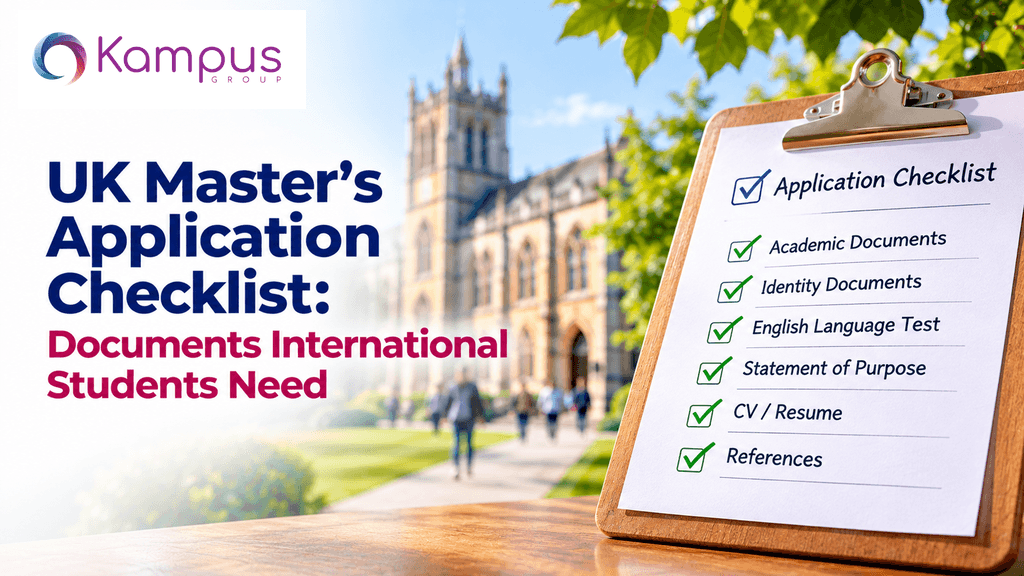
Applying for a master’s degree in the United Kingdom involves more than selecting a university and completing an online application form. International students must provide documents that demonstrate their academic qualifications, English language ability, relevant experience and suitability for their chosen programme.
Although UK universities generally request similar documents, the exact requirements vary depending on the institution, course and applicant’s academic background. Some programmes may require only a degree certificate and academic transcript, while others may request a detailed CV, professional references, a portfolio, a research proposal or evidence of relevant work experience.
Preparing these documents early can help you avoid unnecessary delays and improve the overall quality of your application.
Whether you are applying for an MSc, MA, MBA or another postgraduate qualification, this guide provides a practical checklist of the documents international students may need when applying to UK universities.
1. Academic Degree Certificate
Your degree certificate provides official evidence that you have completed your previous qualification and are eligible for postgraduate study.
For most master’s applications, universities require a recognised bachelor’s degree or an equivalent qualification.
International applicants should prepare:
- A clear copy of their bachelor’s degree certificate.
- Any additional academic qualification relevant to the application.
- Official evidence of qualification completion if the final certificate has not yet been issued.
For example, applicants from Nigeria may submit certificates from recognised universities, while applicants from Ghana may need to provide qualifications from institutions whose programmes meet the university’s accreditation requirements.
If you have not received your final certificate, some universities may temporarily accept an official completion letter or provisional certificate. This depends on their admissions policy.
2. Academic Transcripts
Academic transcripts provide a detailed record of the modules you studied, your grades and your overall academic performance.
Universities use transcripts to assess whether your previous education meets the academic requirements of your chosen master’s programme.
Your transcript should generally show:
- Your full name.
- Name of the awarding institution.
- Programme or course studied.
- Modules completed.
- Grades obtained.
- Overall classification or CGPA, where applicable.
- Dates of study or academic completion.
If you are applying for a specialist programme, the university may pay particular attention to specific undergraduate modules.
For example, an applicant applying for MSc Data Science may need to demonstrate previous knowledge of mathematics, statistics, computing or related subjects.
Important: Some universities require official transcripts to be sent directly by the awarding institution. Others accept uploaded copies during the initial application and request verified documents later.
3. Updated Curriculum Vitae (CV)
A CV provides an overview of your academic background, employment history, professional skills and relevant achievements.
Although not every UK university requires a CV for every master’s application, it is commonly requested for professional, management and specialist programmes.
Your CV should include:
- Full name and contact details.
- Educational qualifications.
- Employment history.
- Job titles and responsibilities.
- Relevant professional experience.
- Skills and certifications.
- Professional training.
- Research, projects or publications, where applicable.
For applicants with work experience, the CV should clearly explain their responsibilities and achievements rather than simply listing previous job titles.
For example, someone applying for MSc Human Resource Management could highlight experience in recruitment, employee relations, staff training or workforce administration.
Applicants with limited professional experience can focus on academic projects, internships, volunteering, leadership activities and relevant skills.
4. Personal Statement or Statement of Purpose
The personal statement explains why you want to study a particular master’s programme and why you are a suitable applicant.
It allows the university to understand your academic interests, motivation and future objectives.
A strong personal statement should explain:
- Your previous academic background.
- Why you have chosen the programme.
- How your undergraduate qualification relates to the course.
- Relevant work experience or professional interests.
- Why you selected the university.
- What knowledge and skills you hope to develop.
- Your short-term and long-term career goals.
For example, a graduate with a bachelor’s degree in Accounting applying for MSc Finance should explain how the programme will deepen their understanding of financial analysis, investment, corporate finance or financial management.
Avoid using the same generic statement for every university. Your explanation should reflect the actual course content and demonstrate that you understand what you are applying to study.
5. English Language Proficiency Evidence
UK universities need to establish that international applicants can understand lectures, participate in academic discussions, complete assignments and communicate effectively.
Depending on the institution and applicant’s previous education, evidence may include:
- IELTS Academic.
- PTE Academic.
- TOEFL iBT.
- Other approved English language tests.
- An accepted English language qualification.
- Evidence of previous education taught in English, where an exemption is permitted.
The required score depends on the university and programme.
Some courses may require a higher overall score or minimum marks in individual components such as reading, writing, listening and speaking.
Applicants from countries where English is widely used, including Nigeria, Ghana and other African countries, should not automatically assume that they are exempt from English language testing.
Some universities accept WAEC or other national English language qualifications, while others may require an approved test or apply different exemption rules for postgraduate applicants.
Always check the university’s English language policy before booking a test.
6. Reference Letters
References help universities assess an applicant’s academic ability, professional conduct and suitability for postgraduate study.
Depending on the programme, universities may request one or two references.
Common reference types include:
Academic reference: Provided by a lecturer, academic adviser, project supervisor or another member of the applicant’s previous institution who can comment on their academic performance.
Professional reference: Provided by a current or former employer or supervisor who can explain the applicant’s professional responsibilities, skills and experience.
A good reference should provide specific information about the applicant rather than simply confirming that they attended a university or worked for an organisation.
Some universities require referees to submit references directly through an online portal or institutional email address.
7. Valid International Passport
A passport is commonly requested during the university application process to verify the applicant’s identity and personal information.
Prepare a clear copy of the relevant passport identification page showing:
- Full name.
- Date of birth.
- Passport number.
- Nationality.
- Photograph.
- Passport expiry date.
Ensure that your name and date of birth are consistent across your passport, academic documents and application form.
If your passport is close to expiry, consider renewing it before making significant travel arrangements.
8. Professional Certificates and Additional Qualifications
Some postgraduate programmes consider professional qualifications and additional training when assessing applicants.
These may include:
- ACCA qualifications.
- CIMA qualifications.
- CIPD qualifications.
- Project management certifications.
- IT and technology certifications.
- Professional registration documents.
- Industry-specific training certificates.
For example, a student applying for an MSc Accounting and Finance may benefit from providing relevant professional accounting qualifications where requested.
These documents do not automatically replace a bachelor’s degree, but they may strengthen an application when they are relevant to the chosen programme.
9. Evidence of Work Experience
Certain postgraduate programmes require applicants to demonstrate relevant professional experience.
This is particularly common for:
- MBA programmes.
- Executive management courses.
- Specialist professional master’s programmes.
- Selected healthcare and education programmes.
- Courses designed for experienced industry professionals.
Acceptable evidence may include:
- Employment letters.
- Reference letters from employers.
- Work experience certificates.
- Professional appointment letters.
- Detailed CVs.
- Other documents requested by the university.
If the programme requires a particular number of years of experience, ensure that your supporting documents clearly establish your employment history and responsibilities.
10. Research Proposal
A research proposal is generally required for selected research-based postgraduate programmes rather than every taught master’s degree.
It outlines the research topic you intend to investigate and how you plan to approach it.
A proposal may include:
- Proposed research title.
- Background to the research.
- Research problem.
- Aim and objectives.
- Research questions.
- Proposed methodology.
- Expected contribution.
- Preliminary references.
Students applying for an MRes, MPhil or research-focused master’s programme should check whether a proposal is required and whether they need to contact a potential supervisor before applying.
11. Portfolio or Work Samples
Some creative and specialist programmes require applicants to submit examples of their previous work.
This is particularly relevant for courses in:
- Graphic Design.
- Fashion Design.
- Architecture.
- Photography.
- Animation.
- Fine Art.
- Film Production.
- Interior Design.
- Creative Media.
A portfolio may include design projects, photographs, illustrations, architectural drawings, video work or other examples relevant to the programme.
Universities often provide specific instructions on the acceptable format, number of projects and submission method.
12. Other Supporting Documents
Depending on your circumstances and chosen course, a university may request additional documents.
These could include:
- Birth certificate, where specifically requested.
- Change of name or marriage certificate.
- Official translations of documents not issued in English.
- Course descriptions or module outlines.
- Professional registration evidence.
- Evidence of previous study or qualifications.
- A writing sample.
- A portfolio or audition.
- Additional academic or professional references.
Do not submit unnecessary personal documents unless the university requests them or they are relevant to your application.
Complete UK Master’s Application Document Checklist
Use this checklist to organise your documents before submitting your application.
| Document | Usually Required? | Purpose |
|---|---|---|
| Bachelor’s degree certificate | Yes, or acceptable completion evidence | Confirms previous qualification |
| Academic transcript | Yes | Shows academic performance |
| CV | Course-dependent | Summarises education and experience |
| Personal statement | Commonly required | Explains motivation and course suitability |
| English language evidence | If required | Demonstrates English proficiency |
| International passport | Commonly requested | Confirms identity and nationality |
| Academic or professional references | Course-dependent | Supports applicant suitability |
| Professional certificates | If relevant or requested | Demonstrates additional qualifications |
| Employment evidence | Course-dependent | Confirms relevant work experience |
| Research proposal | Research programmes where required | Explains proposed research |
| Portfolio | Creative courses where required | Demonstrates practical ability |
| Official translations | If applicable | Makes non-English documents assessable |
Additional Documents Needed After Receiving a UK University Offer
It is important to understand that the documents required for university admission are not necessarily the same as those needed for the UK Student visa application.
Once you receive an offer, you may need to provide additional evidence to satisfy the university’s conditions and complete its pre-CAS process.
1. Documents to Meet Conditional Offer Requirements
If your offer is conditional, you may need to submit:
- Final academic transcripts.
- Degree certificate.
- English language test results.
- Additional references.
- Evidence of relevant work experience.
- Other documents specified in your offer letter.
The university must confirm that you have met the relevant admission conditions before your place can be finalised.
2. Tuition Deposit Evidence
Some universities require international students to pay a tuition deposit before they can proceed with the CAS process.
You should keep your payment confirmation or receipt and follow the university’s instructions for confirming the payment.
The deposit amount and payment deadline vary by institution.
3. Financial Documents
During the pre-CAS process or visa application, students may be asked to provide evidence of their financial arrangements.
This may include:
- Personal bank statements.
- Parent or sponsor bank statements.
- Evidence of the relationship between the student and sponsor.
- A sponsor letter, where appropriate.
- Scholarship confirmation.
- Official student loan documentation, where applicable.
The exact evidence required depends on the student’s circumstances and the applicable immigration rules.
4. Confirmation of Acceptance for Studies (CAS)
The CAS is an electronic record issued by a licensed UK Student sponsor. It contains information about your course and sponsorship and is required for a Student visa application.
A university will normally issue a CAS after completing its relevant admission and sponsorship checks.
An offer letter alone is not sufficient to apply for a Student visa.
5. UK Student Visa Documents
For a Student visa application, international students generally need:
- Valid passport or travel document.
- CAS reference number.
- Financial evidence, where required.
- Evidence of English language ability, where applicable.
- Tuberculosis test certificate, if required based on residence history and course duration.
- Additional documents requested by UK Visas and Immigration.
Applicants should check the latest UK government guidance because immigration requirements can change.
How to Prepare Your Documents for a Successful Application
Having the correct documents is important, but the way you prepare and submit them also matters.
1. Check the university’s specific requirements
Do not assume that every UK university requests the same documents. Review the application checklist for your exact programme.
2. Ensure your documents are clear and readable
Scan certificates and transcripts properly. Avoid submitting blurred photographs, incomplete pages or documents with missing information.
3. Use consistent personal information
Your name, date of birth and academic details should match across your passport, application form and supporting documents.
If your name has changed, provide the relevant supporting evidence where requested.
4. Prepare a course-specific personal statement
Your statement should explain why you are suitable for the programme and how it supports your academic and professional objectives.
5. Request references early
Lecturers and employers may need time to prepare references. Contact them early and provide clear instructions about the university’s requirements.
6. Keep digital copies of everything
Maintain organised copies of all documents, application confirmations, university correspondence and payment receipts.
7. Submit before the deadline
Allow sufficient time for document verification, English language testing and any additional university requirements.
When Should You Start Preparing Your UK Master’s Application Documents?
It is advisable to begin preparing your documents several months before your intended intake.
A useful preparation timeline is:
| Period | Recommended Activity |
|---|---|
| 6–9 months before intake | Research universities, courses and entry requirements |
| 5–7 months before intake | Gather academic documents and prepare your CV |
| 4–6 months before intake | Write your personal statement and arrange references |
| 3–5 months before intake | Submit university applications |
| 2–4 months before intake | Respond to offers and satisfy outstanding conditions |
| After admission conditions are met | Complete deposit and pre-CAS requirements |
| After receiving CAS | Prepare and submit your Student visa application |
This is a suggested planning schedule, not a fixed university deadline. Some programmes close applications earlier, particularly where places are limited or additional assessments are required.
Frequently Asked Questions
What documents do I need to apply for a master’s degree in the UK?
Most applicants need a bachelor’s degree certificate, academic transcripts, a personal statement, a valid passport and English language evidence where required. Some programmes also request a CV, references, work experience evidence, a research proposal or portfolio.
Can I apply for a UK master’s degree without my final degree certificate?
Yes, some universities accept applications while students are awaiting their final certificate. They may assess an official transcript, provisional certificate or completion letter initially, but the final qualification evidence will usually need to be submitted before admission is confirmed.
Is IELTS compulsory for all international students applying to UK universities?
No. Some universities accept alternative English language tests, previous education taught in English or other evidence under their exemption policies. However, requirements vary by institution and course.
Do I need a CV to apply for a master’s degree in the UK?
Not always. Some universities require a CV for postgraduate applications, while others request one only for professional or specialist programmes. It is useful to have an updated CV ready.
How many reference letters do I need for a UK master’s application?
This depends on the university and course. Some programmes require one reference, others request two, while certain courses may not require references at the initial application stage.
Do all UK master’s programmes require work experience?
No. Most taught master’s programmes do not require professional work experience, although some specialist courses and MBA programmes may have specific experience requirements.
Do I need a bank statement when applying to a UK university?
A bank statement is not normally required for the initial academic application unless the university specifically requests financial information. Financial evidence is generally relevant to the university’s pre-CAS checks and the Student visa application, depending on the institution’s procedures and the applicant’s circumstances.
Can I use the same personal statement for different UK universities?
You can use a common structure, but you should tailor each statement to the specific course and university. Explain why the programme’s modules, teaching approach and academic focus match your goals.

Written by
Fimijoba Micheal Oladokun is an International Student Consultant, SEO Specialist and Technical Writer at Kampus Group Nigeria. He leverages data-driven insights to support strategic decision-making while guiding prospective international students through admissions and study abroad processes. He also creates clear, SEO-optimized technical content that enhances digital engagement and simplifies complex educational topics.
Get a free, unbiased assessment from a Kampus Group advisor — no obligation, completely free.
More on College Prep
Foundation Year vs International Year One in the UK: Which Should You Choose?
Choosing the right route into a UK university is an important decision for international students. While some applicants meet the direct entry requirements for an undergraduate degree, others may need additional academic
6 Nov 2026
Can Work Experience Help You Qualify for a UK Master’s?
Many international students assume that they need an excellent undergraduate degree result to gain admission to a master’s programme in the United Kingdom. Although academic qualifications are important, they are not alw
20 Oct 2026
What International Students Should Know About University Deposits
Receiving an admission offer from an overseas university is an exciting milestone. However, for many international students, accepting that offer comes with another important step: paying a university deposit. A universi
4 Sept 2026